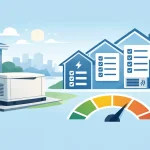

A generator that starts easily but cannot handle your well pump, refrigerator, and air conditioner at the same time is not real backup power. Whole house generator sizing begins with an honest look at what your home actually uses during an outage – not a guess based on square footage alone. The right unit keeps priority systems running without constant overloads, nuisance shutdowns, or paying for far more capacity than your household needs.
For many households, a properly sized standby generator is a practical property investment. It can protect food, keep a sump pump running, support medical equipment, maintain heat or cooling, and make extended outages much more manageable. The best size depends on your appliances, electrical service, fuel supply, and whether you want to power essentials or nearly everything in the home.
What Whole House Generator Sizing Really Means
Generator capacity is measured in watts or kilowatts. One kilowatt equals 1,000 watts. A 10 kW generator can supply up to 10,000 watts, while a 22 kW model can supply up to 22,000 watts under its rated conditions.
The phrase “whole house” can mean two different things. For one buyer, it means every major circuit can operate normally, including central air conditioning, electric cooking, laundry equipment, and a pool pump. For another, it means the entire home is covered through a transfer switch, but the generator manages priority loads so high-demand appliances do not all start together.
That difference matters. A smaller generator with smart load management may provide excellent outage coverage for a large home. A larger generator may be the better fit when you want fewer restrictions, have multiple HVAC systems, use electric heat, or run high-demand equipment such as a deep well pump, workshop tools, or a large refrigerator and freezer setup.
Start With the Loads You Cannot Go Without
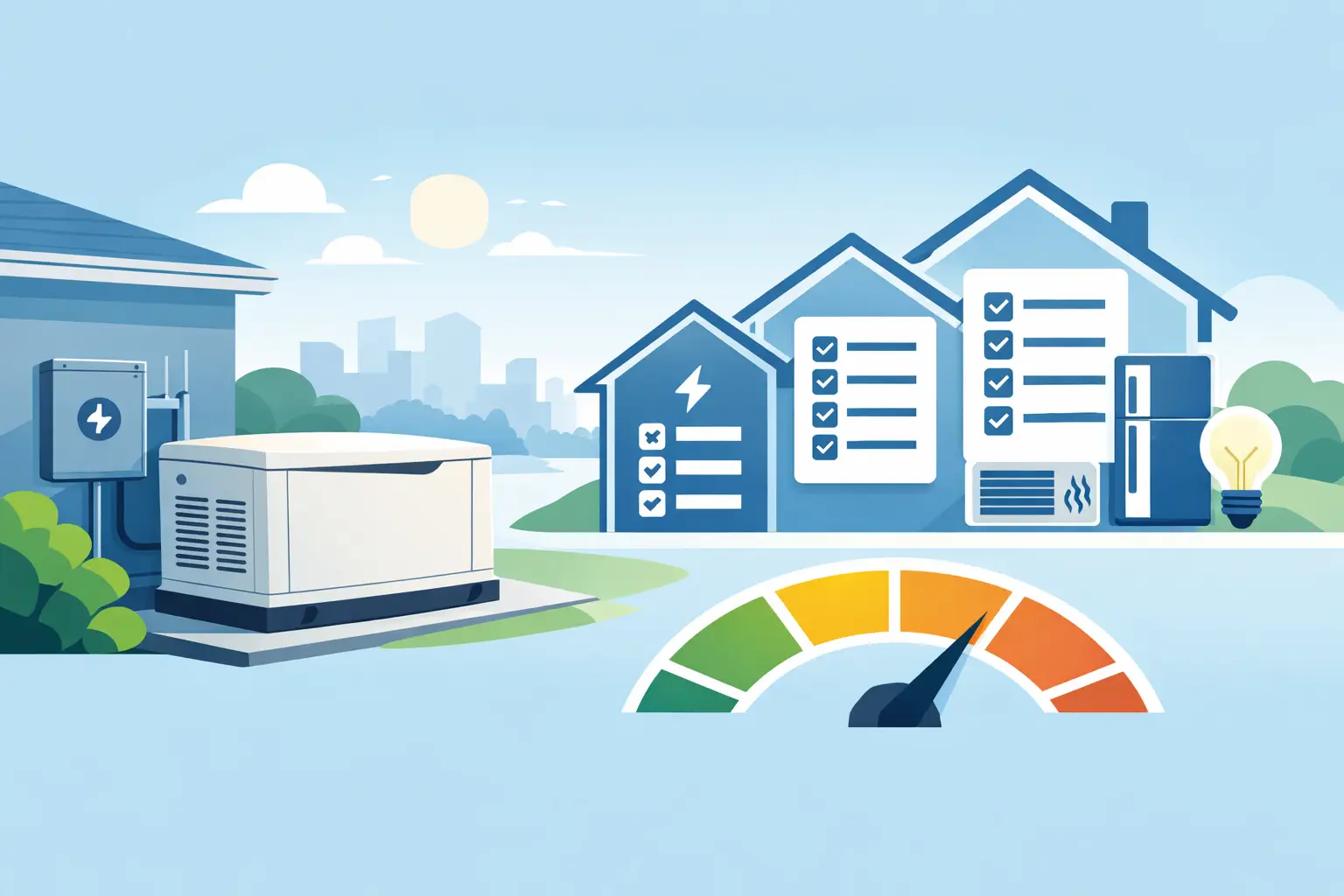
Before comparing generator models, separate appliances into three groups: essential, preferred, and optional. Essential loads are the items you need for safety, food storage, water, heating, or medical needs. Preferred loads make an outage more comfortable. Optional loads are items you can leave off until utility power returns.
A typical essential-load plan may include a refrigerator, freezer, lights, internet equipment, a gas furnace blower, sump pump, well pump, garage door opener, microwave, and a few outlets for charging devices. In warmer climates, a small central AC system or a mini-split may also be essential. In colder areas, electric space heaters can create a major sizing challenge because they draw significant continuous power.
Do not assume a home with gas appliances has low electrical demand. Gas furnaces, gas water heaters, and gas ranges may still need electricity for blowers, ignition, controls, and ventilation. Likewise, a well pump might have a moderate running load but require a much larger surge when it starts.
Running Watts and Starting Watts Are Both Important
Most appliances use more power at startup than while operating. This is especially common with motors and compressors in pumps, refrigerators, freezers, air conditioners, and some power tools. The generator must handle that brief starting surge without voltage dropping enough to trip equipment or shut down.
For example, a refrigerator may run at roughly 600 to 800 watts but briefly need 1,800 to 2,400 watts to start. A 1 hp well pump can have a much higher startup requirement than its normal running draw. Central air conditioning is often the largest single load in the home, and the compressor startup surge can heavily influence your generator choice.
Use appliance labels, owner manuals, and manufacturer specifications whenever possible. Look for running watts, rated watts, locked-rotor amps, or starting watts. If a label lists amps and volts, use this simple estimate:
Watts = volts × amps
For a standard 120-volt appliance drawing 10 amps, the estimated demand is 1,200 watts. For a 240-volt appliance drawing 20 amps, the estimate is 4,800 watts. Actual power factor and motor behavior can affect the result, so treat this as a planning number rather than a final installation calculation.
A Practical Generator Size Range for Many Homes
There is no single correct size for every household, but these ranges provide a useful starting point for comparison.
A 7.5 to 10 kW generator often supports a carefully selected essentials package. It may run refrigeration, lighting, internet, a furnace blower, and one or two pumps, but homeowners usually need to manage large appliances and central AC use.
A 12 to 16 kW generator is commonly suitable for households that want broader coverage, including more circuits and possibly one modest central air conditioner with proper load management. This range can be a strong value when the goal is dependable comfort rather than operating every appliance at once.
A 17 to 22 kW generator is a popular whole-home range for larger homes, homes with a well pump, or households that want one central AC system, kitchen loads, laundry, and daily essentials with fewer compromises. It still may not cover every high-draw electric appliance simultaneously.
A 24 kW or larger generator may be appropriate for large homes, multiple HVAC systems, electric heat, electric water heating, luxury kitchen equipment, workshops, or homes where normal operation during long outages is the goal. Bigger capacity costs more upfront and can use more fuel, so the upgrade should match a real need.
Do Not Size by Square Footage Alone
Square footage can offer a rough clue, but it misses the equipment that drives electrical demand. A 1,800-square-foot home with electric heat, a well pump, two refrigerators, and central AC may need more generator capacity than a 3,000-square-foot home with natural gas heat, public water, and efficient appliances.
Pay close attention to these high-demand items:
- Central air conditioners and heat pumps
- Electric furnaces, electric water heaters, and electric ranges
- Well pumps, sump pumps, and sewage ejector pumps
- EV chargers, hot tubs, pool pumps, and shop equipment
- Multiple refrigerators, freezers, and large dehumidifiers
You do not necessarily need to power all of them. A generator plan works best when it reflects how you will live during an outage. You may decide that the EV charger, dryer, pool equipment, and hot tub remain off while the generator is running. That choice can reduce the generator size and installation cost substantially.
Factor in Load Management and Soft Starts
Load-management modules can temporarily prevent certain appliances from running when demand is high. For instance, a system may pause an electric water heater while the AC compressor starts, then restore that circuit when capacity is available. This allows a properly designed smaller generator to support more circuits safely.
A soft-start device for compatible air conditioners can also reduce compressor startup demand. It does not make an AC system free to operate, but it can lower the peak surge enough to expand your generator options. This is particularly useful when central air conditioning is a priority but moving to a much larger generator is not.
These tools must be selected and installed correctly. Ask an experienced electrician or generator installer to verify compatibility with your HVAC equipment and transfer switch setup.
Fuel Type Changes the Buying Decision
Standby whole-house generators generally use natural gas or liquid propane. Natural gas offers long-duration operation when utility gas service remains available, but available gas pressure and line sizing must be checked. Propane provides an on-site fuel supply, though tank capacity determines how long you can run before refueling.
Portable generators commonly use gasoline, propane, or dual-fuel configurations. They can be a cost-effective option for essential loads, but they require manual setup, safe outdoor placement, fuel planning, and a properly installed transfer switch or generator inlet. Never run a portable generator in a garage, enclosed porch, basement, or near doors and windows. Carbon monoxide is a serious hazard.
Fuel consumption rises with electrical load. A generator that is too large for your normal outage plan may cycle inefficiently or cost more to operate. A generator that is too small may run near maximum output for extended periods, leaving little room for motor starts or unexpected loads. A moderate capacity buffer is usually smart.
Plan for the Transfer Switch and Electrical Service
The generator is only part of the system. A transfer switch safely separates your home from the utility grid during an outage. This protects utility workers and prevents dangerous backfeeding. Depending on your setup, you may use a whole-home automatic transfer switch, a managed-load switch, or a manual transfer switch for selected circuits.
Your electrical service size also matters. A 200-amp service does not mean you need a 200-amp generator. It means your home’s panel can potentially serve that much current from the utility. Generator sizing is based on calculated demand and prioritized loads, not simply the main breaker rating.
Installation requirements vary by location and can include permits, clearances, concrete pads, fuel-line work, wiring, and inspections. A licensed electrician and qualified installer can perform a formal load calculation, confirm local code requirements, and ensure the equipment is grounded and configured correctly.
Leave Room for the Next Upgrade
Think about changes you expect within the next few years. Are you adding a mini-split, finishing a basement, installing a pool, buying an electric vehicle, or replacing a gas appliance with an electric model? If those projects are likely, choosing a little extra generator capacity now may be less expensive than replacing the system later.
At the same time, do not buy capacity only because a larger number sounds safer. Better planning often beats oversizing. Compare rated output, surge capability, fuel consumption, noise level, warranty terms, transfer switch compatibility, and the circuits you truly want available during an outage.
The right generator should fit the way your household actually operates when the lights go out. Build your load list, identify the motor surges, decide what can wait, and have a qualified installer verify the final numbers. That preparation gives you backup power you can count on when you need it most.